
State Park · Florida, United States
Bill Baggs Cape Florida State Park
Bill Baggs Cape Florida State Park is a state park in Florida, United States, covering 506 acres (205 ha), established in 1966.
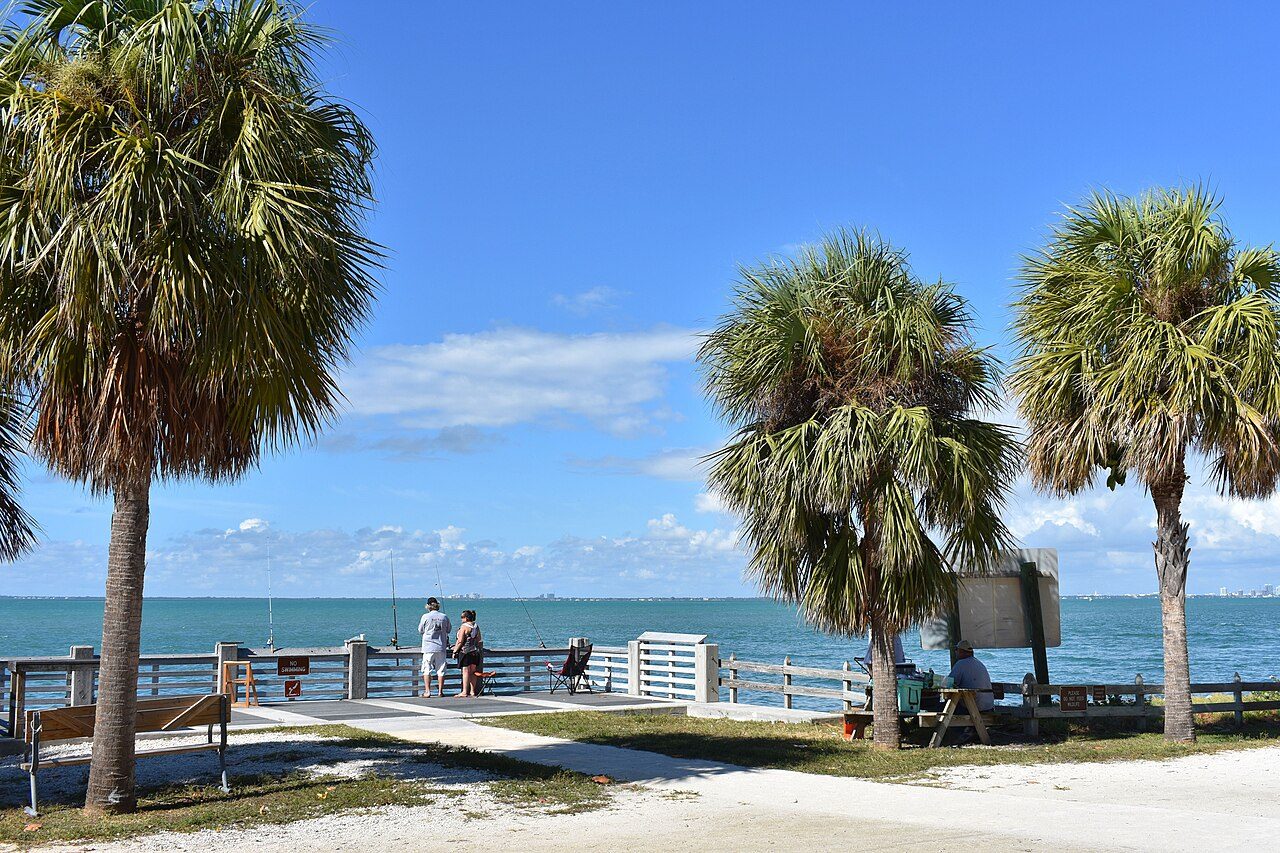
Photo: Tamanoeconomico via Wikimedia Commons, CC BY-SA 4.0. Cropped and resized for display.
Park facts
| Park type | State Park |
|---|---|
| Location | Miami-Dade 25°40′32″N 80°09′33″W / 25.6755°N 80.1591°W / 25.6755; -80.1591, Florida, United States |
| Area | 506 acres (205 ha) |
| Established | 1966 |
| Coordinates | 25.6736° N, 80.1594° W |
| Managed by | Florida state park system |
Every fact above is taken from the sources listed below; anything no source states is left blank rather than guessed.
About Bill Baggs Cape Florida State Park
Bill Baggs Cape Florida State Park occupies approximately the southern third of the island of Key Biscayne, at coordinates 25°40′25″N 80°09′34″W. This park includes the Cape Florida Light, the oldest standing structure in Greater Miami. In 2005, Cape Florida was ranked as having the 8th best beach in the country, and in 2013 Forbes ranked it at 7th. The park was named in honor of Bill Baggs, editor of The Miami News from 1957 until his death in 1969. He worked to protect the land from development and to preserve some of the key in its natural state.
Description from the park's Wikipedia article (CC BY-SA), linked in the sources below.
Airports near this park
The airports a visitor would actually fly into, nearest first — each link opens its profile on our sister site AirportProfiles.
- Miami International Airport (MIA) · Miami, United States · 11.7 miles away
- Fort Lauderdale Hollywood International Airport (FLL) · Fort Lauderdale, United States · 27.6 miles away
- Palm Beach International Airport (PBI) · West Palm Beach, United States · 69.9 miles away
Parks nearby
More parks in Florida

Frequently asked questions
Where is Bill Baggs Cape Florida State Park?
Bill Baggs Cape Florida State Park is in Florida, United States (25.6736° N, 80.1594° W).
When was Bill Baggs Cape Florida State Park established?
Bill Baggs Cape Florida State Park was established in 1966, per the source listed at the foot of this page.
How big is Bill Baggs Cape Florida State Park?
Bill Baggs Cape Florida State Park covers 506 acres (205 ha).
Sources
- https://en.wikipedia.org/wiki/List_of_Florida_state_parks — Wikipedia list of Florida state parks — park name, county/location, size, year where the table states them.
- https://en.wikipedia.org/wiki/Bill_Baggs_Cape_Florida_State_Park — Wikipedia article — description (CC BY-SA).